
How Arrest Warrants Work in Marshall County
In Marshall County, an arrest warrant starts with paperwork. A criminal complaint goes to a judge, who reviews it for probable cause under the Minnesota Rules of Criminal Procedure. If the judge signs off, the warrant authorizes a peace officer to take the named person into custody and bring that person back before a judge for the next step. The court sets the warrant's terms. The sheriff, or another authorized officer, carries out the service. Minnesota law also permits warrantless arrests in defined situations, so custody can begin without a warrant when the statute allows it. For any Marshall County case, two places answer questions: the district court file and the sheriff's office. Check both before assuming anything about a warrant's status.
Probable Cause and the Complaint
The complaint does the charging. It names the charge and lays out the supporting facts, and a judge reads it before deciding what process to issue, whether a warrant, a summons, or something else. Here is the catch for a Marshall County warrant search. The supporting affidavit may not be available remotely. Some warrants are sealed too. So a blank public result can still mean a case exists. An online case record is therefore not a warrant check. If you find a case, read the register of actions first, then call court administration at 218-745-4921 to confirm the current process. Ask what the order requires, and whether the person must appear or be brought into custody.
Arrest Warrants: What They Contain
A Marshall County warrant order carries the details an officer needs to match a person to a case, along with the conditions the judge set. Bail shows up when the judge sets it. A Sign and Release marker appears instead when the case falls in that statutory category.
| Case file number | The district court number, for example 27-CR-24-1234, where 27 is the county court code. |
|---|---|
| Person named | The defendant named on the complaint, with identifying fields that may be restricted. |
| Charge | The offense and charge level carried from the complaint. |
| Issuing judge | The judge who signed the order in Marshall County District Court. |
| Bail or release terms | A set amount, a $0 Sign and Release marker, or a hold indicator. |
| Status | Active, served, arrested, recalled, quashed, or superseded. |
Bail, Bond, and Approved Agents
Bail and release conditions come from a judge alone. The Minnesota Judicial Branch explains that bail or bond can be paid at the jail or at the criminal court where the case was heard, and that the jail takes authorized bonds only from state-approved agents. Cash works for bail. Confirm what the Marshall County jail accepts before you travel, and remember that a refund comes by judicial order, not from the counter.
| Question | Who Answers It |
|---|---|
| Is bail set, and at what amount? | The issuing judge, through the court file |
| Is a bond agent required? | The jail, using the state-approved agent list |
| Is this a Sign and Release Warrant? | Court administration, from the warrant marker |
| What happens at booking? | The sheriff's office |
The state bail bond program page lists approved agents and marks the program's boundary.
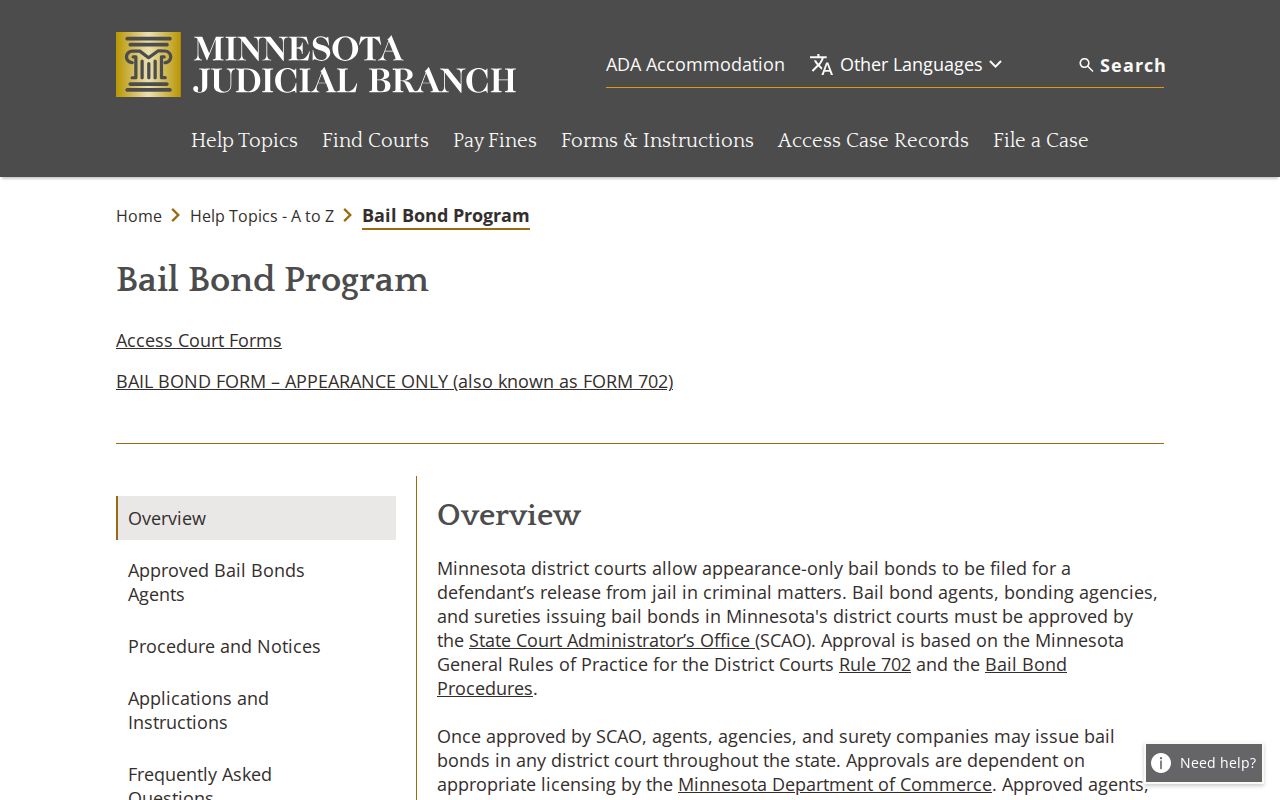
In Marshall County, as across Minnesota district courts, only bond agents on the state-approved list may write bonds. Confirm details before paying anyone.
How Warrants Get Served in Marshall County
The Marshall County sheriff's office is the published local law-enforcement contact, serving process and handling custody across the county. Deputies can serve a warrant during a traffic stop, at a home, or through a planned arrest. Other agencies cross paths with warrants too. An outside department can pick up a Marshall County warrant, just as a local officer can encounter one from another county or a federal court. On the jail roster, a charge cell may show a warrant or hold label after custody begins. Treat that as a custody field, nothing more. It does not confirm which outstanding warrants are open. For service or custody questions, call 218-745-5411 instead of relying on the roster.
Reading a Record Without the Roster
The jail roster answers one question: who is in custody at the time of the update. It is generally refreshed in the morning, and the page itself warns it cannot guarantee accuracy or support legal action. Someone with an active arrest warrant may never show up there, since the warrant has not been served. The Minnesota criminal FAQ explains the custody risk of walking into court in person and points readers to the sheriff and the court instead.
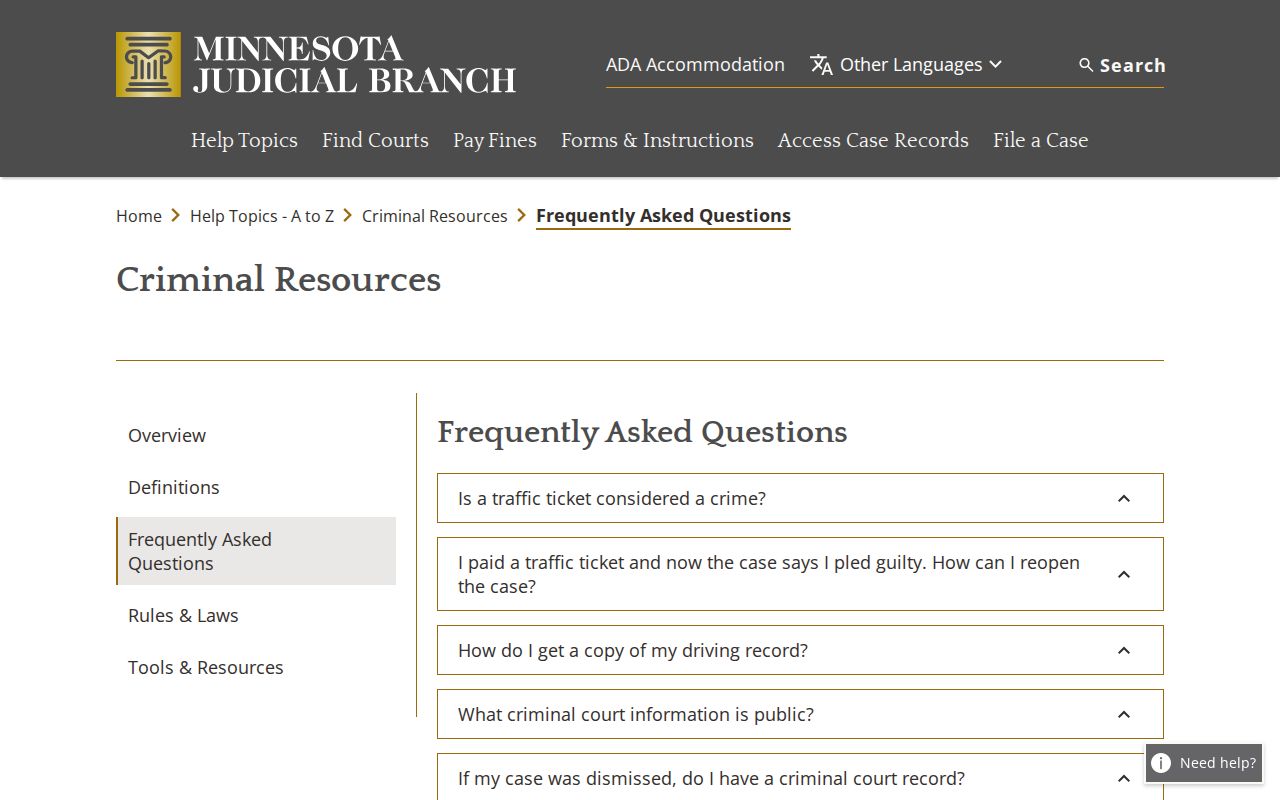
That official caution is why a Marshall County arrest warrant question should end with a phone call and legal advice. Skip the unannounced visit.
Arrest Warrants, Summonses, and Bench Warrants
Three processes reach the same Marshall County courthouse by different routes. The complaint is the charging document. A summons directs an appearance without an arrest, while a bench warrant follows a missed obligation in a case already before the court.
| Process | How It Starts | What It Means |
|---|---|---|
| Summons | Court directs an appearance after a charge | No arrest authority attached |
| Arrest warrant | Complaint plus a probable-cause finding | Custody authorized under the order |
| Bench warrant | Missed hearing or ignored citation | Depends on the order, and may be Sign and Release |
Federal Warrants Have Their Own Courthouse
Marshall County sits inside the federal District of Minnesota, and federal warrants are handled there, not in state court. The court's public access page explains that federal warrants and surveillance orders stay sealed unless a court order unseals them, and that unsealed documents may be reviewed at a clerk's office terminal. A Marshall County search clears nothing on the federal side. The District of Minnesota records page lays out the federal access route, and the U.S. Marshals district office lists Marshall among the counties it serves.
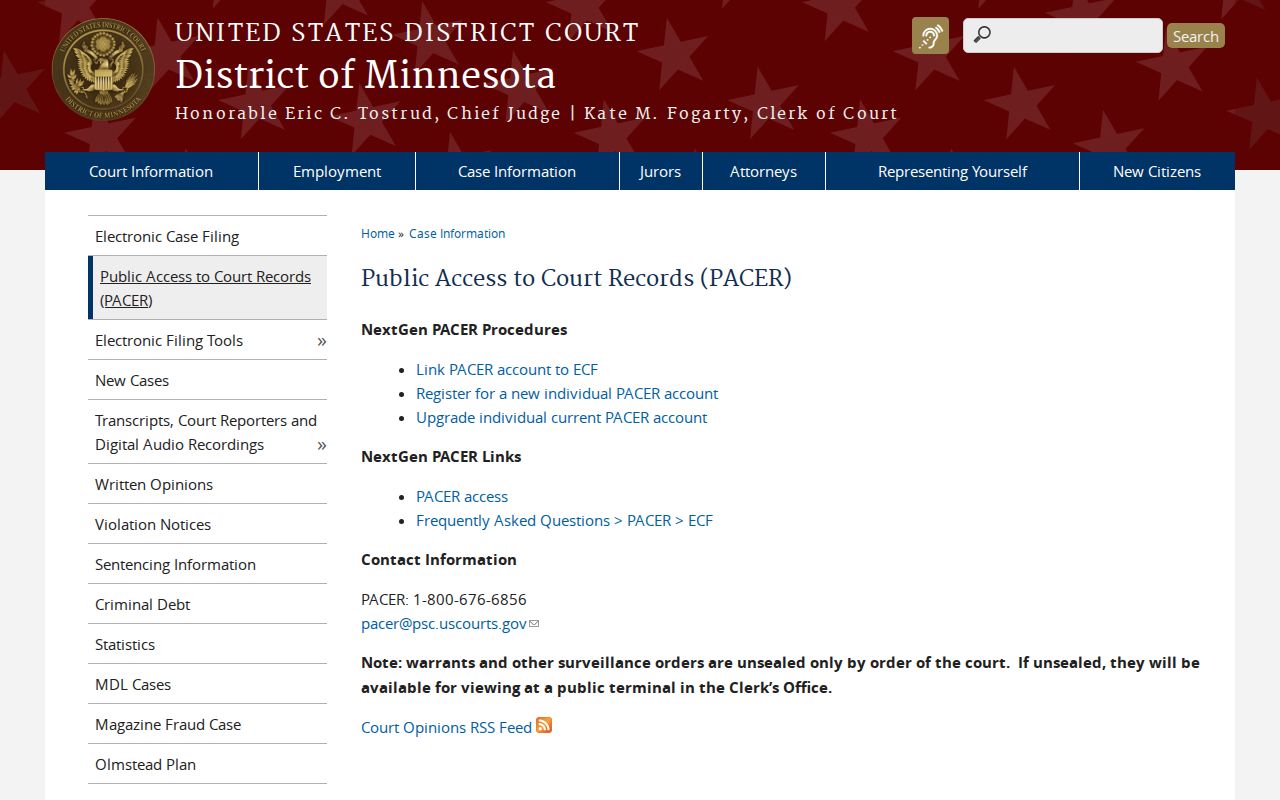
If the paperwork names a federal district court or an indictment, the Marshall County file is not the controlling record. The federal case governs.
Handling an Arrest Warrant in Your Name
Before anything else, pin down three things: the warrant type, the issuing court, and whether bail applies. Then get a lawyer. An attorney in Marshall County can request a recall, file a quash motion, arrange a court appearance, negotiate release conditions, or plan a surrender that keeps you out of an unplanned arrest. Minnesota's criminal FAQ is blunt on one point: walking into court on an active warrant can mean being taken into custody on the spot.
Important: Do not appear in person on a suspected arrest warrant without legal advice, and never pay an unsolicited caller who claims a warrant exists.
The Form Officers Carry for Sign and Release
Minnesota supplies a standard form for officers handling a qualifying warrant in the field. It captures the new court date along with the contact details the officer gathers. That paperwork is what clears a Sign and Release Warrant in Marshall County without an arrest. The official Sign and Release Warrant form page publishes the document in several formats, showing exactly what the state expects a person to receive.
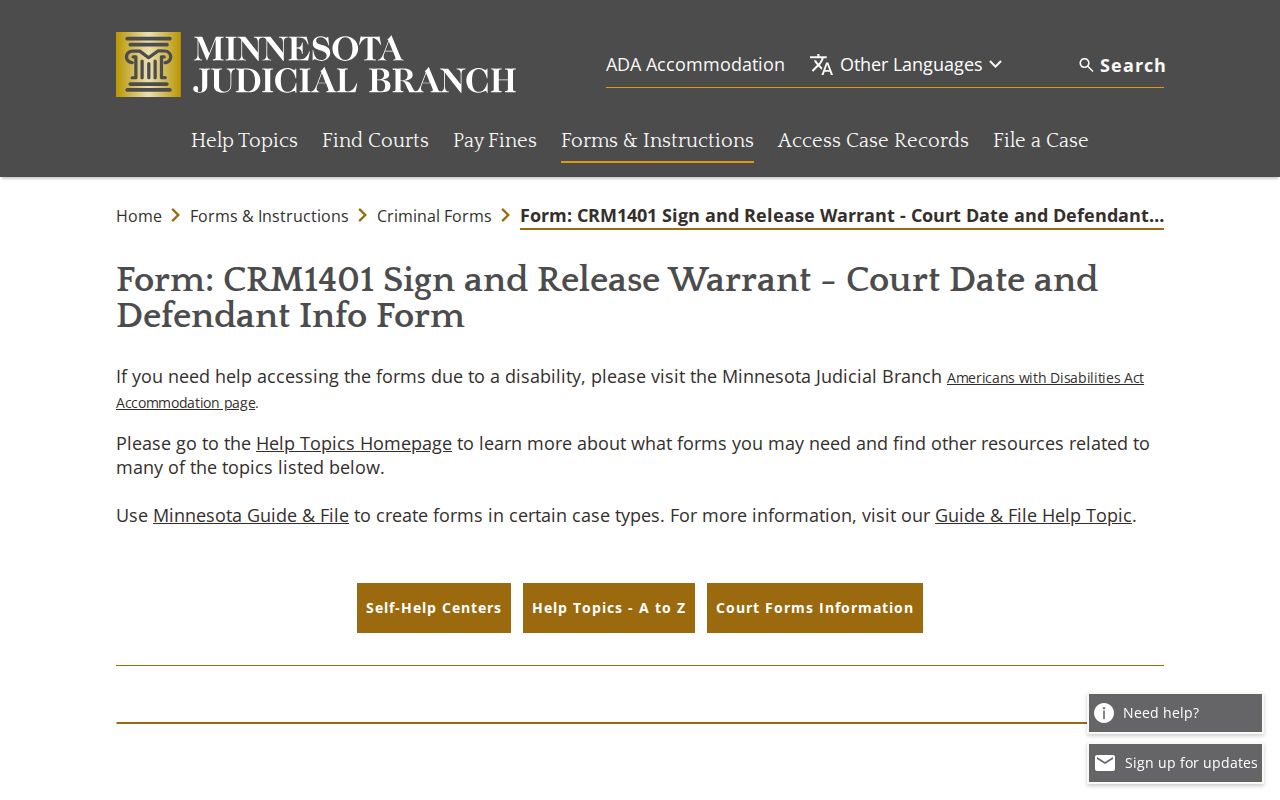
A Sign and Release warrant changes the encounter entirely. The officer hands over a new date instead of making an arrest, so ask which marker the Marshall County record shows.